IMPACT ON DISEASE ACTIVITY
SELECT SAPHNELO CLINICAL DATA HIGHLIGHTS

IMPACT ON DISEASE ACTIVITY

DORIS REMISSION DATA
Results are descriptive only.

DISEASE ACTIVITY AND STEROID-SPARING DATA
Results are descriptive only.

ORGAN DAMAGE
DATA
Results are descriptive only.

RESPONSES SEEN EARLY AND SUSTAINED
Results are descriptive only.
The breadth of BICLA* assesses comprehensive impact across all affected organ systems1,3
THE POWER TO CONTROL DISEASE ACTIVITY
UP TO

OF PATIENTS EXPERIENCED A REDUCTION IN DISEASE ACTIVITY2
POWERFUL DISEASE CONTROL2
Primary endpoints at Week 52:
- In TULIP-2 (IV), BICLA* responder rate was 47.8% (86/180) for SAPHNELO + ST and 31.5% (57/182) for ST alone (P=0.001)†,2
- In TULIP-SC, BICLA* responder rate was 58.5% (64/109) for SAPHNELO SC + ST and 43.2% (48/111) for ST alone (P=0.0231)‡,§,||,2
TULIP-1 (IV): Primary endpoint (SRI-4 responder rate) did not result in statistical significance vs ST alone; the secondary endpoint (BICLA*) achieved improvement (descriptive only).2,4
The reduction in disease activity seen in BICLA and SRI-4 was related primarily to improvement in the mucocutaneous and musculoskeletal organ systems.2
*BICLA is a composite score of SLE disease activity that requires1,2:
- At least one level of improvement in all moderately or severely affected organ systems (reduction of all baseline BILAG A [severe] to B/C/D and baseline BILAG B [moderate] to C/D)
- No new organ involvement (≥1 new BILAG A or ≥2 new BILAG B)
- No worsening of disease activity as measured by SLEDAI-2K (worsening defined as an increase from baseline of >0 points) and PGA (worsening defined as an increase of ≥0.30 points from baseline)
- No discontinuation of treatment
- No use of restricted medications
†Difference: 16.3% (95% Cl: 6.3 to 26.3).3
‡Difference: 15.3% (95% CI: 2.1 to 28.5).2
§Based on an interim analysis using Pocock alpha spending function with an information fraction of 0.6. The primary endpoint was tested at the alpha level of 0.0354 at the interim analysis.2
||BICLA response rate at Week 52 was evaluated after 220 randomized patients had either completed or withdrawn from the trial, according to the protocol. At the final analysis (n=367), BICLA response rates were consistent with the primary analysis.28
REMISSION ATTAINMENT WITH SAPHNELO
Post hoc analysis of pooled data from the Phase 3 Trials (TULIP-1, TULIP-2, and LTE)9,10
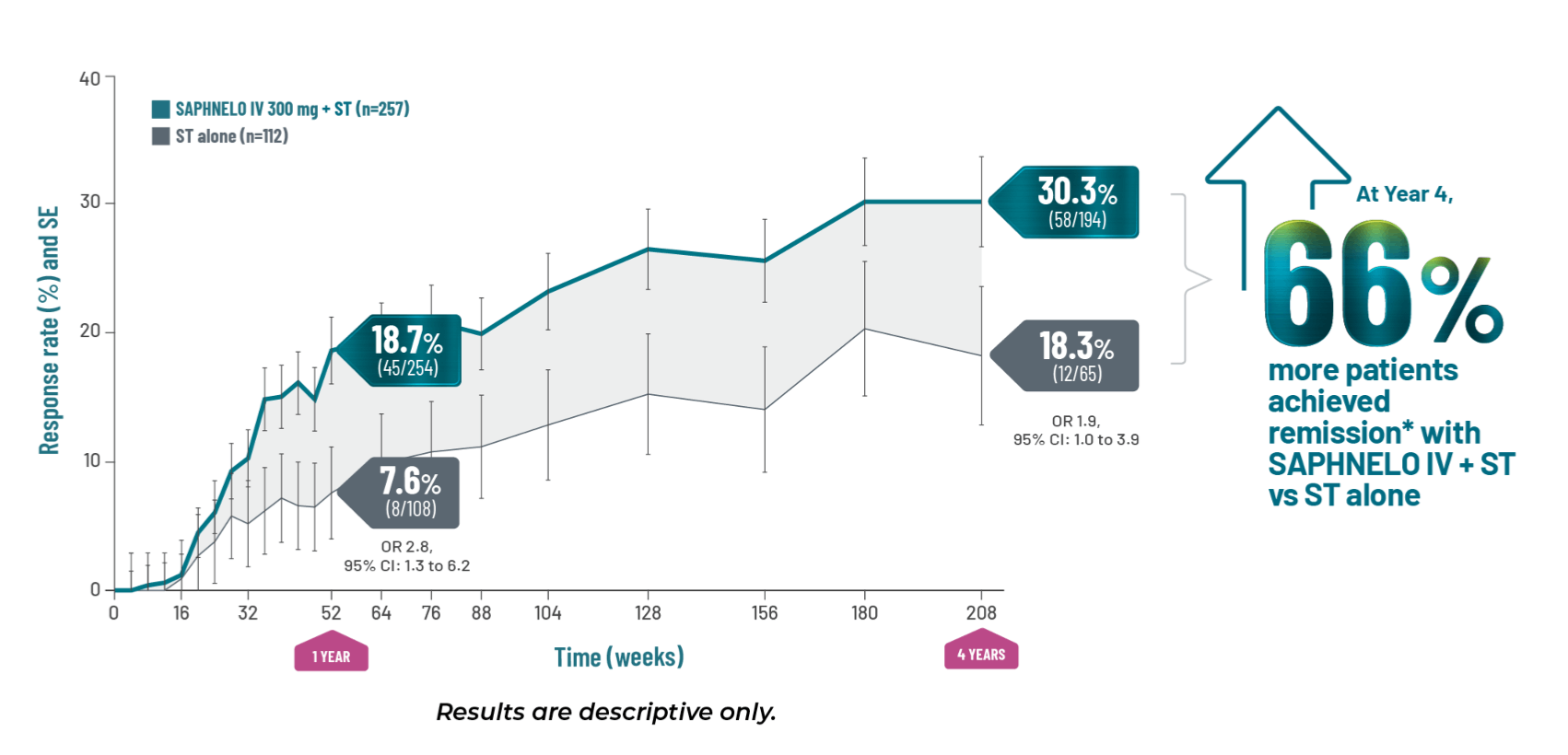

*DORIS (Definition of Remission In SLE) response was defined as9:
- Clinical SLEDAI†=0
- PGA <0.5 (range 0-3)
- Prednisone/equivalent dose ≤5 mg/day
- Stable maintenance doses of immunosuppressants
- No use of restricted medications‡
- No premature discontinuation of investigational product
- Antimalarials were permitted
Studies were not designed to evaluate disease remission as described in FDA Guidance for Industry for SLE.§,11

†Clinical SLEDAI is defined as the sum of all SLEDAI-2K items except for serology (increased dsDNA and low complement).9
‡TULIP-1/TULIP-2 only.9
§Remission is defined in the US FDA Guidance for Industry for SLE as the complete absence of disease activity, using a DAI (ie, ECLAM, SLEDAI, SLAM, BILAG, or other DAI deemed appropriate for clinical trials). The term remission is used if patients do not continue to receive ongoing therapy for SLE.11
Pre-specified endpoint for the TULIP-SC final analysis28
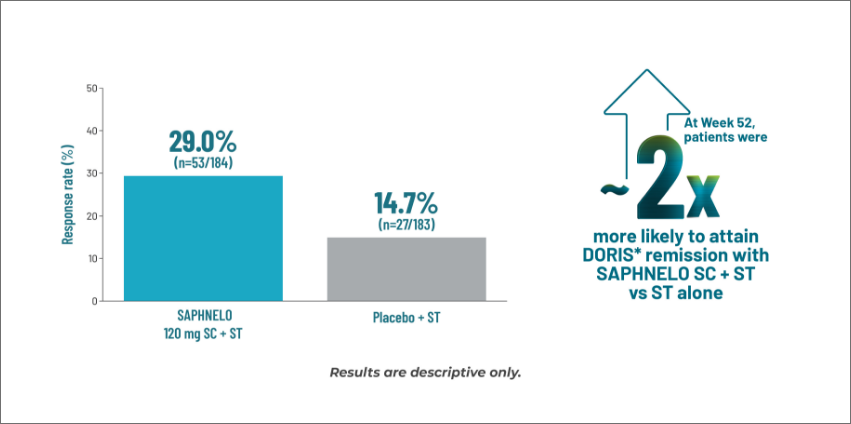
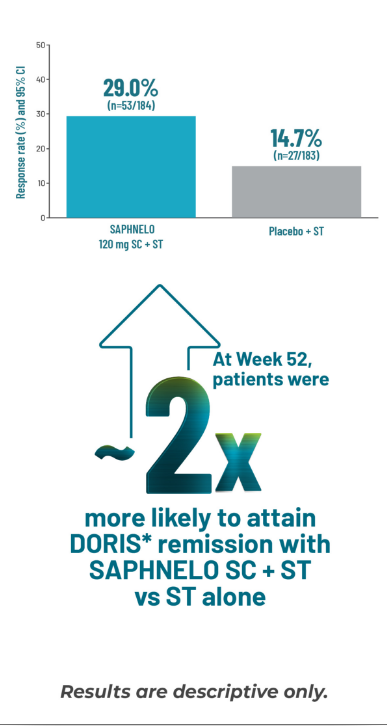
*DORIS (Definition of Remission In SLE) response was defined as28:
- Clinical SLEDAI†=0
- PGA <0.5 (range 0-3)
- Prednisone/equivalent dose ≤5 mg/day
- Stable maintenance doses of immunosuppressants
- No use of restricted medications
- No premature discontinuation of investigational product
- Antimalarials were permitted
Studies were not designed to evaluate disease remission as described in FDA Guidance for Industry for SLE.‡,11
†Clinical SLEDAI is defined as the sum of all SLEDAI-2K items except for serology (increased dsDNA and low complement).9
‡Remission is defined in the US FDA Guidance for Industry for SLE as the complete absence of disease activity, using a DAI (ie, ECLAM, SLEDAI, SLAM, BILAG, or other DAI deemed appropriate for clinical trials). The term remission is used if patients do not continue to receive ongoing therapy for SLE.11
DISEASE ACTIVITY AND STEROID REDUCTION
DORIS remission criteria include a clinical SLEDAI of zero and steroids ≤5 mg/day9
Clinical SLEDAI is defined as the sum of all SLEDAI-2K items except for serology (increased dsDNA binding and low complement).14
At Year 1, 34% (85/254) of patients on SAPHNELO IV + ST achieved a clinical SLEDAI of ZERO vs 20% (22/108) on ST alone.
Post hoc analysis of pooled data from TULIP-1 and TULIP-2*,14
CLINICAL SLEDAI OF ZERO14
Post hoc analysis of pooled data from the LTE study
At Year 4

of patients (80/194) achieved a clinical SLEDAI of ZERO vs 28% (18/65) on ST alone*,14
Results are descriptive only.
Key Secondary Endpoint
At Year 1, proportion of patients with baseline OCS ≥10 mg/day who achieved and maintained OCS reduction to ≤7.5 mg/day:
TULIP-2: 52% (45/87) of patients on SAPHNELO IV + ST vs 30% (25/83) with ST alone (P=0.004)†‡,2,3
TULIP-1: 49% (50/103) of patients on SAPHNELO IV + ST vs 32% (33/102) with ST alone (descriptive only)†§,4
STEROID REDUCTION TO ≤5 MG/DAY15,16
Post hoc analysis of pooled data from the LTE study
At Year 4

of patients (90/121) were on OCS ≤5 mg/day vs 63% (26/41) onST aloneII
0 mg/day
36%
of patients (n=44/121)15
0 mg/day to ≤5 mg/day
38%
of patients (n=46/121)15
Results are descriptive only.
*Denominator at each visit reflects the number of patients with available/observed data at that timepoint.9
†During the TULIP-1 and TULIP-2 trials, OCS dose was tapered to ≤7.5 mg/day from Weeks 8 to 40 and the dose was maintained from Weeks 40 to 52.2-4
‡Difference: 21% (95% CI: 6.8 to 35.7).2,3
§Difference: 16.7% (95% CI: 3.5 to 29.8).4
IIPercentages of patients by OCS dose group at each year during the TULIP trials and TULIP-LTE, excluding 3 patients from the SAPHNELO IV + ST group with baseline dose >40 mg/day. Percentages are calculated based on all subjects in the full analysis set with available data at each visit.15,16
In the LTE study, there was no forced OCS taper.16
SLEDAI-2K organ domain response was defined as reduction
from baseline in SLEDAI-2K organ domain score†
4-YEAR DATA:
EXPLORATORY OUTCOMES FROM THE TULIP LTE SAFETY STUDY15,16
Reduced SLE disease activity was demonstrated in pivotal studies.
Click for results.
Exploratory data from the TULIP LTE trial are displayed below.
See study design, including limitations.
Click here to see safety data
from pivotal trials and LTE study.
Results are descriptive only.
STEROID-SPARING EFFICACY. REDUCED FLARE RATE.
Key Secondary Endpoints
Click on the tiles below to flip them and view their data.




STEROID-SPARING
EFFICACY
VIEW
First and only SLE biologic with
STATISTICALLY SIGNIFICANT STEROID-SPARING EFFICACY2,3,8
Proportion of patients with baseline OCS ≥10 mg/day who achieved and maintained OCS reduction to ≤7.5 mg/day:
TULIP-2: 52% (45/87) of patients on SAPHNELO + ST vs 30% (25/83) with ST alone (P=0.004)*,†,2,3
72
%
In TULIP-2:
more patients achieved a sustained OCS dose reduction to ≤7.5 mg/day vs ST alone*
TULIP-1: 49% (50/103) of patients on SAPHNELO + ST vs 32% (33/102) on ST alone.*,‡,4
Results are descriptive only.
BACK



FEWER
FLARES
VIEW
Reduced annual flare rate vs ST alone§
ZERO FLARES
IN MORE PATIENTS9,10
In TULIP-2, annualized flare rate was 0.43 for SAPHNELO + ST (N=180) compared with 0.64 for ST alone (N=182); RR: 0.67
(95% CI: 0.48 to 0.94).3 Results did not reach statistical significance.
78
%
Post hoc subgroup analysis from TULIP-2:
(35/45) of patients with reduced OCS dose had zero flares vs 48% (12/25) of patients on ST alone.9,10
Analysis is descriptive only.
In TULIP-1, annualized flare rate was 0.60 for SAPHNELO + ST (N=180) compared with 0.72 for ST alone (N=184);
difference: 0.83 (95% CI: 0.60 to 1.14).4
Results are descriptive only.
BACK
*OCS dose was tapered to ≤7.5 mg/day from Weeks 8 to 40 and the dose was maintained from Weeks 40 to 52.2-4
†Difference: 21% (95% CI: 6.8 to 35.7).2,3
‡Difference: 16.7% (95% CI: 3.5 to 29.8).4
§In TULIP-1/TULIP-2 trials, a flare was defined as at least one new BILAG-2004 A item or ≥2 new BILAG-2004 B items as compared with the previous visit.3,4
Flare rate was reduced but the difference was not statistically significant.2
REDUCTION OF ORGAN DAMAGE PROGRESSION21
In a comparative assessment of SAPHNELO IV + ST in TULIP trials vs real-world ST (N=915)21
REMISSION (as defined by DORIS) over time from pooled TULIP trials and LTE14,15



Patients on
SAPHNELO IV + ST had a
74% reduced risk of a
cardiovascular event
over 4 years vs ST alone
(SAPHNELO + ST HR: 0.00863
vs UTLC HR: 0.0336).2
*SLICC-ACR Damage Index (SDI) is an internationally accepted and validated tool that measures irreversible organ damage across 12 domains/organ systems (ie, ocular, neuropsychiatric, renal, pulmonary, cardiovascular, peripheral vascular, gastrointestinal, musculoskeletal, skin, gonadal, diabetes, malignancy). Each item must have been present for ≥6 months. Its score can range from 0 to 46 points.23
†Propensity score methods and censoring weighting were used to account for baseline confounding and loss to follow-up. Baseline confounders selected included: age; SLE duration (y); gender (as recorded); race; SLEDAI-2K score; SDI score; proteinuria; glucocorticoid use; glucocorticoid dose (mg/d, oral prednisone equivalent); antimalarial use; immunosuppressant use; high blood pressure (BP) or hypertension; and history of smoking.21
‡Estimated following weighting for confounding and/or informative censoring, as specified in methods.21
§Estimated following weighting for confounding and/or informative censoring, as specified in methods, and direct adjustment for baseline variables which remained imbalanced.21
RESPONSES WERE SEEN EARLY AND SUSTAINED3,6
In TULIP-2, more patients on SAPHNELO IV + ST achieved sustained BICLA response over 52 weeks vs ST alone3,6
Proportion of patients on SAPHNELO + ST with BICLA response through week 52 vs ST alone3,17


TULIP trials were not designed to measure onset of effect. Separation observed at Week 4, the first assessment after the first dose. Time course of sustained BICLA response was not multiplicity adjusted and is descriptive only.3,4,6
- In TULIP-1, time to sustained BICLA response favored SAPHNELO IV + ST (N=180) vs ST alone (N=184)†,4
*First BICLA assessment after administration of the first dose.6
†In TULIP-1, HR: 1.93 (95% CI: 1.38 to 2.73).4
STEROID-SPARING EFFICACY. REDUCED FLARE RATE.
Key Secondary Endpoints
Click on the tiles below to flip them and view their data.
STEROID-SPARING
EFFICACY
VIEW
First and only SLE biologic with
STATISTICALLY SIGNIFICANT STEROID-SPARING EFFICACY2,3,8
Proportion of patients with baseline OCS ≥10 mg/day who achieved and maintained OCS reduction to ≤7.5 mg/day:
TULIP-2: 52% (45/87) of patients on SAPHNELO + ST vs 30% (25/83) with ST alone (P=0.004)*,†,2,3
72
%
In TULIP-2:
more patients achieved a sustained OCS dose reduction to ≤7.5 mg/day vs ST alone*
TULIP-1: 49% (50/103) of patients on SAPHNELO + ST vs 32% (33/102) on ST alone.*,‡,4
Results are descriptive only.
BACK
FEWER
FLARES
VIEW
Reduced annual flare rate vs ST alone§
ZERO FLARES
IN MORE PATIENTS9,10
In TULIP-2, annualized flare rate was 0.43 for SAPHNELO + ST (N=180) compared with 0.64 for ST alone (N=182); RR: 0.67
(95% CI: 0.48 to 0.94).3 Results did not reach statistical significance.
78
%
Post hoc subgroup analysis from TULIP-2:
(35/45) of patients with reduced OCS dose had zero flares vs 48% (12/25) of patients on ST alone.9,10
Analysis is descriptive only.
In TULIP-1, annualized flare rate was 0.60 for SAPHNELO + ST (N=180) compared with 0.72 for ST alone (N=184);
difference: 0.83 (95% CI: 0.60 to 1.14).4
Results are descriptive only.
BACK
*OCS dose was tapered to ≤7.5 mg/day from Weeks 8 to 40 and the dose was maintained from Weeks 40 to 52.2-4
†Difference: 21% (95% CI: 6.8 to 35.7).2,3
‡Difference: 16.7% (95% CI: 3.5 to 29.8).4
§In TULIP-1/TULIP-2 trials, a flare was defined as at least one new BILAG-2004 A item or ≥2 new BILAG-2004 B items as compared with the previous visit.3,4
Flare rate was reduced but the difference was not statistically significant.2
ACHIEVE CONTROL WITH LESS STEROIDS
STEROID-SPARING
EFFICACY
VIEW
First and only SLE biologic with
STATISTICALLY SIGNIFICANT STEROID-SPARING EFFICACY2,3,8
Key Secondary Endpoint
At Year 1, proportion of patients with baseline OCS ≥10 mg/day who achieved and maintained OCS reduction to ≤7.5 mg/day:
TULIP-2: 52% (45/87) of patients on SAPHNELO + ST vs 30% (25/83) with ST alone (P=0.004); difference: 21% (95% CI: 6.8 to 35.7)*,2,3
72%
In TULIP-2:
more patients achieved a SUSTAINED OCS DOSE REDUCTION FROM ≥10 MG/DAY TO ≤7.5 MG/DAY vs ST alone*
TULIP-1: 49% (50/103) of patients on SAPHNELO + ST vs 32% (33/102) with ST alone .*,4
BACK
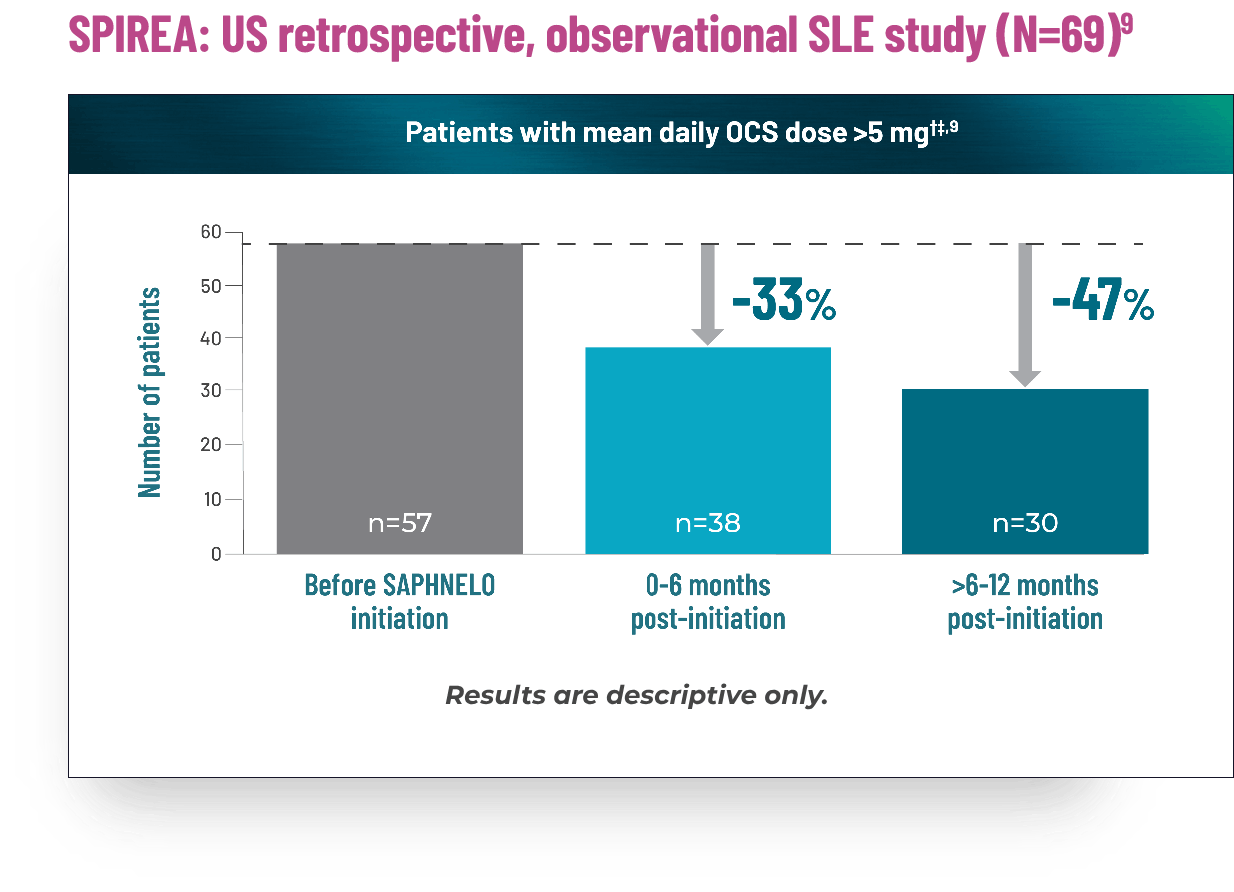

33%
(n=23/69) of patients DISCONTINUED OCS by Month 12 of SAPHNELO treatment9
*OCS dose was tapered to ≤7.5 mg/day from Weeks 8 to 40 and the dose was maintained from Weeks 40 to 52.2-4
†Days supplied: total prednisone equivalent dose per patient/total number of OCS days supplied.9
‡Adult patients with SLE were included if they had: ≥6 months of medical history before SAPHNELO initiation; ≥12 months of follow-up post-initiation; ≥6 infusions within 12 months post-initiation; receiving OCS therapy. Patients with mean daily OCS dose >5 mg at baseline were included in this analysis.9
Study Designs
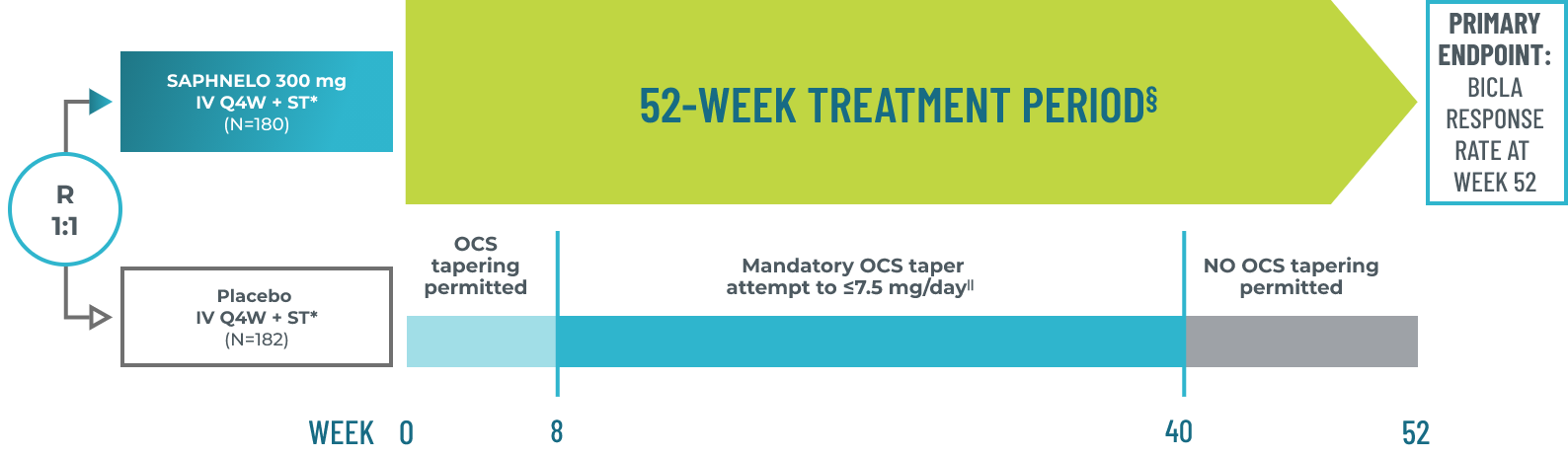
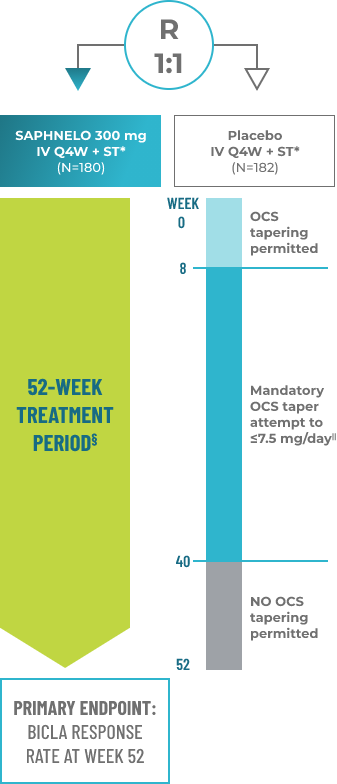
A 52-week, phase 3, randomized, double-blind, placebo-controlled, parallel-group, multicenter trial (N=362)3,6
KEY ELIGIBILITY CRITERIA
- - Adults 18 years and older with moderate to severe SLE
- - SLEDAl-2K score of ≥6 points†
- - Clinical SLEDAl-2K score of ≥4 points‡
- - Organ domain scores: severe = BILAG ≥1 A item or moderate BILAG ≥2 B items
- - PGA score ≥1
- - Seropositive (ANA, anti-dsDNA or anti-Smith antibodies)
- - Receiving standard therapy (ST)
- Stratification by:
- IFNGS test status
(high or low) - SLEDAI-2K score
(<10 or ≥10) - OCS dosage (<10 mg/day or ≥10 mg/day of prednisone or equivalent)
Key secondary endpoints included BICLA response rate at Week 52 in the interferon test—high subgroup; OCS reduction from ≥10 mg/day at baseline to ≤7.5 mg/day (mandatory taper attempt required from Weeks 8 to 40) sustained during Weeks 40 to 52; ≥50% reduction in CLASI activity score (a measure of skin disease activity) from baseline to Week 12; ≥50% reduction in both swollen and tender joints from baseline to Week 52; and annualized flare rate through Week 52.2-4,6
*In TULIP-2, standard therapy included either one or any combination of the following: antimalarials (70%), immunosuppressants (48%), nonsteroidal anti-inflammatory drugs (24%), and/or OCS (81%). Patients continued to receive their existing SLE therapy at stable doses, except OCS (prednisone or equivalent), which were tapered per protocol.2-4,6
†Excluding points attributable to fever, lupus-related headache, or organic brain syndrome.3,4
‡Excluding points from laboratory results.2,3
§Last treatment dose was administered at Week 48.3
IIFor patients with baseline OCS dosage ≥10 mg/day prednisone or equivalent.2-4
TULIP-1 and TULIP-2 had similar study designs. In TULIP-1, 457 adult patients with moderate to severe SLE were randomized (2:1:2) to SAPHNELO 300 mg IV Q4W (N=180), anifrolumab 150 mg IV Q4W (N=93), or placebo IV Q4W (N=184) in addition to ST at stable doses [either one or any combination of antimalarials (73%), immunosuppressants (47%), nonsteroidal anti-inflammatory agents (18%), and/or OCS (83%)]. OCS (prednisone or equivalent) was tapered per protocol. The primary endpoint was SRI-4 response rate at Week 52 in the SAPHNELO 300 mg group vs the placebo group. Key secondary endpoints were similar. Other prespecified endpoints included BICLA response rate at Week 52.2,4,8,24
A 3-year, phase 3, randomized, double-blind, placebo-controlled, LTE safety study in adult patients with moderate to severe SLE that completed TULIP-1 or TULIP-2 through the 52-week double-blind treatment period and met all eligibility requirements (N=547). Patients were blinded to treatment and received either SAPHNELO 300 mg or placebo, IV Q4W plus ST. ST included at least one of the following: OCS, antimalarials, nonsteroidal anti-inflammatory agents and immunosuppressants. Investigators could modify background ST treatment, including immunosuppressants and OCS, per clinical judgment. The primary outcome was long-term safety and tolerability as assessed by adverse events (AEs), serious AEs (including deaths), AEs leading to treatment discontinuations (DAEs), and AEs of special interest (AESIs). For primary safety, the main comparison during the 3-year LTE study was between patients who received SAPHNELO 300 mg in the TULIP trials and continued to receive SAPHNELO 300 mg (n=257) and those who received placebo at the start of the TULIP trials and who were re-randomized to receive placebo (n=112). Exploratory efficacy outcomes included SLEDAI-2K, PGA, OCS use, and SDI global score. Flare incidence and severity were also assessed. The main comparison groups for exploratory efficacy outcomes were patients who received SAPHNELO 300 mg or placebo in the TULIP trials and continued the same treatments throughout the LTE study (combined SAPHNELO 300 mg [n=358] versus combined placebo [n=178] groups, respectively).16,25
LTE STUDY KEY LIMITATIONS: Study was not powered for statistical comparison of safety or efficacy between groups and the duration of study may not capture rare events with longer latency periods; data regarding elderly patients are limited and pregnant patients were excluded; potential selection bias (only patients completing a TULIP study were eligible); survival bias (no imputation was performed for patients who discontinued and/or received additional immunosuppressants); and efficacy data could be biased based on patient withdrawals related to SLE flares.16
A 52-week, multicenter, randomized, double-blind, placebo-controlled study evaluated the safety and efficacy of SAPHNELO administered subcutaneously in adults with SLE. Eligible patients were ≥18 years old with moderate to severe disease (SLEDAI-2K ≥6), organ involvement as assessed by BILAG, and a PGA score ≥1, while receiving stable doses of standard SLE therapy (OCS, antimalarials, and/or immunosuppressants) at baseline. Patients continued their existing SLE therapy at stable doses throughout the study, except for OCS (prednisone or equivalent), which was tapered per protocol in those receiving ≥10 mg/day at baseline. Patients with active lupus nephritis or severe central nervous system lupus were excluded.
Patients were randomized 1:1 to receive 120 mg anifrolumab-fnia or placebo via subcutaneous injection every week, stratified by baseline SLEDAI-2K score (<10 vs ≥10 points), OCS dose (<10 mg/day vs ≥10 mg/day prednisone or equivalent), and IFNGS status (high vs low). The primary endpoint was the proportion of patients achieving a BICLA response at Week 52. A pre-specified interim analysis was conducted after 220 patients had completed Week 52 or withdrawn from the trial.2,26
MUSE was a 52-week, Phase 2b, randomized, double-blind, placebo-controlled, parallel-group, multicenter study of 305 adult patients with moderately to severely active SLE who were randomized (1:1:1) to SAPHNELO 300 mg (N=99), anifrolumab 1000 mg (N=104), or placebo (N=102), administered IV Q4W. Patients were also receiving ST at stable doses (either one or any combination of antimalarials, immunosuppressants, or OCS). Tapering of OCS was encouraged but was at the discretion of the investigators. Patients had seropositivity for antinuclear antibodies and/or anti-dsDNA and/or anti-Sm antibodies; SLEDAI-2K score of ≥6 (excluding points from lupus headache or organic brain syndrome); clinical SLEDAI-2K score of ≥4 (excluding points from laboratory results); BILAG-2004 organ domain scores of ≥1 A or ≥2 B items; and a PGA of score ≥1. Patients were stratified by IFNGS test status (high or low), SLEDAI-2K score (<10 or ≥10), and OCS dosage (<10 mg/day or ≥10 mg/day). The primary endpoint was a combined assessment of SRI-4 response rate and sustained reduction in OCS (<10 mg/day and ≤ OCS dose at Week 1, sustained for 12 weeks) measured at Week 24.27
A multinational, prospective, observational study assessing the effectiveness of SAPHNELO in patients with SLE in routine clinical practice. The objective of this interim analysis is to evaluate the effects of SAPHNELO treatment on DORIS remission (and LLDAS) attainment in patients with SLE from the first 6 months of the ASTER study. Eligible adults with SLE were enrolled at routine clinical visits before the first SAPHNELO infusion date (index) and started SAPHNELO treatment per the approved country-specific label at study sites.12
ASTER STUDY KEY LIMITATIONS: The patient population was restricted to those with moderate to severe SLE initiating SAPHNELO treatment, and the requirement for a smartphone and mobile application for patient-reported outcomes excluded patients without the necessary technology or willingness to use it. The extended 3-year follow-up period introduced a risk of patient attrition, potentially affecting data completeness, especially in later time points. Finally, as a single-arm observational study, ASTER lacks a control group, which prevents causal inferences regarding the effectiveness of SAPHNELO and only allows for the observation of outcome changes among patients who began treatment.13
A real-world evidence, retrospective, observational cohort study of SAPHNELO-treated adult patients with SLE from the American Rheumatology Network, a consortium of US community rheumatology practices. Eligible patients included those aged ≥18 years at anifrolumab initiation (index); ≥6 months of medical history before index; ≥12 months of follow-up post-index; ≥6 infusions within 12 months post-index and receiving OCS therapy. Observation periods included baseline (6 months prior to index), follow-up period 1 (0-6 months post-index), and follow-up period 2 (>6-12 months post-index). Outcome measures included mean daily OCS dose (or prednisone equivalent) for days supplied, proportion of patients receiving OCS, mean daily OCS dose >5 mg/≤5 mg or >7.5 mg/≤7.5 mg, and clinical disease assessments (SLEDAI-2K, complement C3/C4).19,20
SPIREA STUDY KEY LIMITATIONS: Data are limited by accuracy and completeness of input at the provider level into the care-management tools at the source (eg, EMR, infusion logs, and medical claims) and by actual practice (ie, individual providers may not conduct labs, disease assessments, etc, as regularly or at all compared with other providers).19,20
A retrospective study that compared patients who initiated SAPHNELO 300 mg IV Q4W + ST in TULIP-1 and TULIP-2, the SAPHNELO + ST arm (n=354), with similar patients in the UTLC who received real-world standard of care, the RW ST arm (n=561). For SAPHNELO + ST, ST included OCS, antimalarials, and immunosuppressants. Patients were not allowed to initiate new antimalarials or immunosuppressants, and dosage was required to remain stable through Week 52. Oral corticosteroids were tapered per TULIP trial protocols in all patients with baseline OCS ≥10 mg/day. For RW ST, ST included OCS, antimalarials, and immunosuppressants, without restriction on dosage or length of treatment. All eligible patients who initiated 300 mg of SAPHNELO in TULIP-1 or TULIP-2 were included in the SAPHNELO + ST arm (regardless of subsequent enrollment in the LTE study). Patients in the RW ST arm were included if they met key eligibility criteria from TULIP-1 and TULIP-2.21
Patients in the SAPHNELO + ST arm were indexed at SAPHNELO initiation and followed until the earliest occurrence of death, loss to follow-up, or Week 208 assessment in the LTE study. Patients in the RW ST arm were indexed at the first instance of meeting all eligibility criteria, in which they were receiving ≥1 eligible SOC treatment (their “index assessment”) and followed until the earliest occurrence of death, loss to follow-up, or end of the treatment study period. The primary endpoint was change in SDI from index date to Week 208. Secondary endpoint was time to first SDI progression.21
LASER STUDY KEY LIMITATIONS: The study used propensity score methods instead of a randomized trial design; differential outcome misclassification could affect results due to the combination of trial and RW data sources; changes in SOC over time could also affect study results; while the SAPHNELO and RW SOC arms were balanced at baseline, balance was not guaranteed during follow-up; more proactive attention to glucocorticoid sparing has been a feature of more recent SLE management guidelines which may have influenced results; the possibility of residual confounding cannot completely be excluded as there were temporal improvements in the screening and management of key comorbidities such as hypertension, hyperlipidemia, and bone protection.21
Next

ANA=antinuclear antibody; anti-dsDNA=anti–double-stranded DNA; anti-Sm=anti-Smith antibody; ASTER=Anifrolumab Study of Treatment Effectiveness in the Real World; BICLA=British Isles Lupus Assessment Group–based Composite Lupus Assessment; BILAG=British Isles Lupus Assessment Group; BILAG-2004=British Isles Lupus Assessment Group-2004; CI=confidence interval; CLASI=Cutaneous Lupus Erythematosus Disease Area and Severity Index; CV=cardiovascular; DAI=disease activity index; dsDNA=double-stranded DNA; ECLAM=European Consensus Lupus Activity Measure; EMR=electronic medical records; FDA=Food and Drug Administration; HR=hazard ratio; IFNGS=interferon gene signature; IQR=interquartile range; IV=intravenous; LASER=Long-term Organ Damage in Adult Patients with Active Systemic Lupus Erythematosus; LLDAS=Lupus Low Disease Activity State; LTE=long-term extension; MUSE=MEDI-546 in Subjects with Systemic Lupus Erythematosus (Trial 1); NS=not significant; OCS=oral corticosteroids; OR=odds ratio; PGA=Physician Global Assessment; Q4W=every 4 weeks; R=randomization; RW=real-world; SAE=serious adverse event; SDI=Systemic Lupus International Collaborating Clinics/American College of Rheumatology Damage Index; SLAM=systemic lupus activity measure; SLE=systemic lupus erythematosus; SLEDAI-2K=Systemic Lupus Erythematosus Disease Activity Index-2000; SOC=standard of care; SRI-4=SLE Responder Index-4; ST=standard therapy; TULIP=Treatment of Uncontrolled Lupus via the Interferon Pathway. UTLC=University of Toronto Lupus Cohort; y=years.
WANT MORE INFORMATION ABOUT SAPHNELO? REQUEST A REP
Loading......

CONTRAINDICATION
Known history of anaphylaxis with SAPHNELO.
WARNINGS AND PRECAUTIONS
- Serious Infections: Serious and sometimes fatal infections have occurred in patients receiving immunosuppressive agents, including SAPHNELO. SAPHNELO increases the risk of respiratory infections and herpes zoster. Use caution in patients with severe or chronic infections. Avoid initiating treatment during an active infection and consider interrupting therapy in patients who develop a new infection during treatment
- Hypersensitivity Reaction Including Anaphylaxis: Serious hypersensitivity reactions (including anaphylaxis) have been reported following SAPHNELO administration. Events of angioedema have also been reported. Other hypersensitivity reactions and infusion-related reactions have occurred following administration of SAPHNELO. SAPHNELO should be administered by healthcare providers prepared to manage hypersensitivity reactions, including anaphylaxis and infusion-related reactions, if they occur. Immediately interrupt administration and initiate appropriate therapy if a serious infusion-related or hypersensitivity reaction (eg, anaphylaxis) occurs
- Malignancy: There is an increased risk of malignancies with the use of immunosuppressants. The impact of SAPHNELO on the potential development of malignancies is not known
- Immunization: Avoid the use of live or live-attenuated vaccines in patients treated with SAPHNELO
- Use With Biologic Therapies: SAPHNELO is not recommended for use in combination with other biologic therapies, including B-cell targeted therapies
ADVERSE REACTIONS
The most common adverse reactions (incidence ≥5%) are nasopharyngitis, upper respiratory tract infections, bronchitis, infusion-related reactions, herpes zoster and cough.
In the controlled clinical trials, the incidence of infusion-related reactions was 9.4% in patients while on treatment with SAPHNELO and 7.1% in patients on placebo. Infusion-related reactions were mild to moderate in intensity; the most common symptoms were headache, nausea, vomiting, fatigue, and dizziness.
USE IN SPECIFIC POPULATIONS
Pregnancy: A pregnancy exposure registry monitors pregnancy outcomes in women exposed to SAPHNELO during pregnancy. For more information about the registry or to report a pregnancy while on SAPHNELO, contact AstraZeneca at 1-877-693-9268.
There are insufficient data on the use of SAPHNELO in pregnant women to establish whether there is drug-associated risk for major birth defects or miscarriage. Advise female patients to inform their healthcare provider if they intend to become pregnant during therapy, suspect they are pregnant or become pregnant while receiving SAPHNELO.
Lactation: No data are available regarding the presence of SAPHNELO in human milk, the effects on the breastfed child, or the effects on milk production.
Pediatric Use: The safety and efficacy of SAPHNELO in pediatric patients less than 18 years of age has not been established.
INDICATION
SAPHNELO is indicated for the treatment of adult patients with moderate to severe systemic lupus erythematosus (SLE), who are receiving standard therapy.
Limitations of Use: The efficacy of SAPHNELO has not been evaluated in patients with severe active lupus nephritis or severe active central nervous system lupus. Use is not recommended in these situations.
INDICATION
SAPHNELO is indicated for the treatment of adult patients with moderate to severe systemic lupus erythematosus (SLE), who are receiving standard therapy.
Limitations of Use: The efficacy of SAPHNELO has not been evaluated in patients with severe active lupus nephritis or severe active central nervous system lupus. Use is not recommended in these situations.
Please see full Prescribing Information, including Patient Information.
You may report side effects related to AstraZeneca products.Opens new window  .
.
References: 1. Morand EF, van Vollenhoven R, Furie RA, et al. LLDAS and remission attainment with anifrolumab treatment in patients with systemic lupus erythematosus: results from the TULIP and long-term extension randomised controlled trials. Supplementary appendix. Ann Rheum Dis. 2025;84(5):777-788. 2. SAPHNELO [package insert]. Wilmington, DE: AstraZeneca Pharmaceuticals LP; 2026. 3. Morand EF, Furie R, Tanaka Y, et al; TULIP-2 Trial Investigators. Trial of anifrolumab in active systemic lupus erythematosus. N Engl J Med. 2020;382(3):211-221. 4. Furie RA, Morand EF, Bruce IN, et al; TULIP-1 Study Investigators. Type I interferon inhibitor anifrolumab in active systemic lupus erythematosus (TULIP-1): a randomised, controlled, phase 3 trial. Lancet Rheumatol. 2019;1(4):e208-e219. 5. US Department of Health and Human Services Food and Drug Administration. Guidance for Industry systemic lupus erythematosus—Developing medical products for treatment. Updated June 5, 2020. Accessed April 21, 2026. https://www.fda.gov/media/71150/download
References: 1. Thong B, Olsen NJ. Systemic lupus erythematosus diagnosis and management. Rheumatology (Oxford). 2017;56(suppl1):i3-i13. 2. Allen ME, Rus V, Szeto GL. Leveraging heterogeneity in systemic lupus erythematosus for new therapies. Trends Mol Med. 2021;27(2):152-171. 3. Bertsias G, Cervera R, Boumpas DT. Systemic lupus erythematosus: pathogenesis and clinical features. In: Bijlsma J (ed). EULAR Textbook on Rheumatic Diseases. London: BMJ Group; 2012:476-505. 4. Kaul A, Gordon C, Crow MK, et al. Systemic lupus erythematosus. Nat Rev Dis Primers. 2016;2:16039. 5. Izmirly PM, Parton H, Wang L, et al. Prevalence of systemic lupus erythematosus in the United States: estimates from a meta-analysis of the Centers for Disease Control and Prevention National Lupus Registries. Arthritis Rheumatol. 2021;73(6):991-996. 6. Mauri C, Menon M. The many faces of type I interferon in systemic lupus erythematosus. J Clin Invest. 2015;125(7):2562-2564. 7. Niewold TB, Clark DN, Salloum R, Poole BD. Interferon alpha in systemic lupus erythematosus. J Biomed Biotechnol. 2010;2010:948364. 8. Crow MK. Type I interferon in the pathogenesis of lupus. J Immunol. 2014;192(12):5459-5468. 9. Lauwerys BR, Ducreux J, Houssiau FA. Type I interferon blockade in systemic lupus erythematosus: where do we stand? Rheumatology (Oxford). 2014;53(8):1369-1376. 10. Hoffman RW, Merrill JT, Alarcón-Riquelme MME, et al. Gene expression and pharmacodynamic changes in 1,760 systemic lupus erythematosus patients from two phase III trials of BAFF blockade with tabalumab. Arthritis Rheumatol. 2017;69(3):643-654. 11. Becker AM, Dao KH, Han BK, et al. SLE peripheral blood B cell, T cell and myeloid cell transcriptomes display unique profiles and each subset contributes to the interferon signature. PLoS One. 2013;8(6):e67003. 12. Jefferies CA. Regulating IRFs in IFN driven disease. Front Immunol. 2019;10:325. 13. Mai L, Asaduzzaman A, Noamani B, et al. The baseline interferon signature predicts disease severity over the subsequent 5 years in systemic lupus erythematosus. Arthritis Res Ther. 2021;23(1):29.
References: 1. SAPHNELO [package insert]. Wilmington, DE: AstraZeneca Pharmaceuticals LP; 2026. 2. Mullard A. FDA approves AstraZeneca’s anifrolumab for lupus. Nat Rev Drug Discov. 2021;20(9):658. doi:10.1038/d41573-021-00139-y. 3. Crow MK, Olferiev M, Kirou KA. Type I interferons in autoimmune disease. Annu Rev Pathol. 2019;14:369-393. 4. Wahren-Herlenius M, Dörner T. Immunopathogenic mechanisms of systemic autoimmune disease. Lancet. 2013;382(9894):819-831. 5. Morawski PA, Bolland S. Expanding the B cell-centric view of systemic lupus erythematosus. Trends Immunol. 2017;38(5):373-382. 6. Crow MK. Type I interferon in the pathogenesis of lupus. J Immunol. 2014;192(12):5459-5468. 7. Rönnblom L, Leonard D. Interferon pathway in SLE: one key to unlocking the mystery of the disease. Lupus Sci Med. 2019;6(1):e000270.
References: 1. Ohmura K. Which is the best SLE activity index for clinical trials? Mod Rheumatol. 2021;31(1):20-28. 2. SAPHNELO [package insert]. Wilmington, DE: AstraZeneca Pharmaceuticals LP; 2025. 3. Morand EF, Furie R, Tanaka Y, et al; TULIP-2 Trial Investigators. Trial of anifrolumab in active systemic lupus erythematosus. N Engl J Med. 2020;382(3):211-221. 4. Furie RA, Morand EF, Bruce IN, et al; TULIP-1 Study Investigators. Type I interferon inhibitor anifrolumab in active systemic lupus erythematosus (TULIP-1): a randomised, controlled, phase 3 trial. Lancet Rheumatol. 2019;1(4):e208-e219. 5. Morand EF, Furie RA, Bruce IN, et al. Efficacy of anifrolumab across organ domains in patients with moderate-to-severe systemic lupus erythematosus: a post-hoc analysis of pooled data from the TULIP-1 and TULIP-2 trials. Lancet Rheumatol. 2022;4(4):e282-e292. 6. Morand EF, Furie R, Tanaka Y, et al; TULIP-2 Trial Investigators. Trial of anifrolumab in active systemic lupus erythematosus. Supplementary appendix and Protocol. N Engl J Med. 2020;382(3):211-221. 7. Mikdashi J, Nived O. Measuring disease activity in adults with systemic lupus erythematosus: the challenges of administrative burden and responsiveness to patient concerns in clinical research. Arthritis Res Ther. 2015;17(1):183. 8. Furie RA, Morand EF, Bruce IN, et al; TULIP-1 Study Investigators. Type I interferon inhibitor anifrolumab in active systemic lupus erythematosus (TULIP-1): a randomised, controlled, phase 3 trial. Supplementary appendix. Lancet Rheumatol. 2019;1(4):e208-e219. 9. Morand EF, van Vollenhoven R, Furie RA, et al. LLDAS and remission attainment with anifrolumab treatment in patients with systemic lupus erythematosus: results from the TULIP and long-term extension randomised controlled trials. Ann Rheum Dis. 2025;84(5):777-788. 10. Data on File, REF-215956. AstraZeneca Pharmaceuticals LP. 11. US Department of Health and Human Services Food and Drug Administration. Guidance for Industry systemic lupus erythematosus—Developing medical products for treatment. Updated June 5, 2020. Accessed March 19, 2025. https://www.fda.gov/media/71150/download 12. Mosca M, Amoura Z, Weinmann-Menke J, et al. Attainment of LLDAS and DORIS remission during anifrolumab treatment: interim results from a multinational, observational, post-launch study of treatment effectiveness in the real world. Abstract presented at: European Congress of Rheumatology (EULAR) 2025; June 11-14, 2025; Barcelona, Spain. 13. Mosca M, Emmas C, Nekeman-Nan C, et al. Anifrolumab Study for Treatment Effectiveness in the Real World ASTER among patients with systemic lupus erythematosus, protocol for an international observational effectiveness study. BMJ Open. 2024;14(11):e086055. 14. Morand EF, van Vollenhoven R, Furie RA, et al. LLDAS and remission attainment with anifrolumab treatment in patients with systemic lupus erythematosus: results from the TULIP and long-term extension randomised controlled trials. Supplementary appendix. Ann Rheum Dis. 2025;84(5):777-788. 15. Data on File, REF-173552. AstraZeneca Pharmaceuticals LP. 16. Kalunian KC, Furie R, Morand EF, et al. A randomized, placebo-controlled phase III extension trial of the long-term safety and tolerability of anifrolumab in active systemic lupus erythematosus. Arthritis Rheumatol. 2023;75(2):253-265. 17. Data on File, REF-173556. AstraZeneca Pharmaceuticals LP. 18. Kalunian KC, Furie R, Morand EF, et al. A randomized, placebo-controlled phase III extension trial of the long-term safety and tolerability of anifrolumab in active systemic lupus erythematosus. Supplementary appendix. Arthritis Rheumatol. 2023;75(2):253-265. 19. Kyttaris V, Atefi G, Persons D, Withrow D, Binka M. Reduction in oral corticosteroid use during anifrolumab therapy: observations from a real-world cohort of adults with systemic lupus erythematosus. Poster presented at: ACR Convergence 2024; November 14-19, 2024; Washington, DC. Poster 2438. 20. Kyttaris V, Binka M, Atefi G, et al. Renal outcomes in patients treated with anifrolumab for systemic lupus erythematosus in the US: findings from a real-world study. Poster presented at: European Alliances of Associations for Rheumatology (EULAR) 2024 European Congress of Rheumatology (ECR) Conference; June 12-15, 2024; Vienna, Austria. Poster POS1067. 21. Touma Z, Bruce IN, Furie R, et al. Reduced organ damage accumulation in adult patients with SLE on anifrolumab plus standard of care compared to real-world external controls. Ann Rheum Dis. 2025;84(5):767-776. 22. Touma Z, Bruce IN, Furie R, et al. Treatment with anifrolumab prevents long-term cardiovascular damage accrual compared with real-world standard of care in patients with systemic lupus erythematosus: findings from the LASER study. Abstract presented at ACR 2025. 23. Gladman D, Ginzler E, Goldsmith C, et al. The development and initial validation of the Systemic Lupus International Collaborating Clinics/American College of Rheumatology damage index for systemic lupus erythematosus. Arthritis Rheum. 1996;39(3):363-369. 24. ClinicalTrials.gov Trial NCT02446912. Efficacy and safety of two doses of anifrolumab compared to placebo in adult subjects with active systemic lupus erythematosus. Accessed April 27, 2025. https://clinicaltrials.gov/study/NCT02446912 25. ClinicalTrials.gov Trial NCT02794285. Long term safety of anifrolumab in adult subjects with active systemic lupus erythematosus (TULIP SLE LTE). Accessed February 3, 2025. https://classic.clinicaltrials.gov/ct2/show/NCT02794285 26. ClinicalTrials.gov. Subcutaneous Anifrolumab in Adult Patients With Systemic Lupus Erythematosus (Tulip SC). August 21, 2025. https://clinicaltrials.gov/study/NCT04877691#participation-criteria 27. Furie R, Khamashta M, Merrill JT, et al; CD7073 Study Investigators. Anifrolumab, an anti-interferon-a receptor monoclonal antibody, in moderate-to-severe systemic lupus erythematosus. Arthritis Rheumatol. 2017;69(2):376-386.
References: 1. SAPHNELO [package insert]. Wilmington, DE: AstraZeneca Pharmaceuticals LP; 2026. 2. Kalunian KC, Furie R, Morand EF, et al. A randomized, placebo-controlled phase III extension trial of the long-term safety and tolerability of anifrolumab in active systemic lupus erythematosus. Arthritis Rheumatol. 2023;75(2):253-265. 3. Morand EF, Furie R, Tanaka Y, et al; TULIP-2 Trial Investigators. Trial of anifrolumab in active systemic lupus erythematosus. N Engl J Med. 2020;382(3):211-221. 4. Furie RA, Morand EF, Bruce IN, et al; TULIP-1 study investigators. Type I interferon inhibitor anifrolumab in active systemic lupus erythematosus (TULIP-1): a randomised, controlled, phase 3 trial. Lancet Rheumatol. 2019;1(4):e208-e219. 5. Furie R, Khamashta M, Merrill JT, et al; CD1013 Study Investigators. Anifrolumab, an anti–interferon-α receptor monoclonal antibody, in moderate-to-severe systemic lupus erythematosus. Arthritis Rheumatol. 2017;69(2):376-386. 6. Manzi S, Bruce IN, Morand EF, et al; TULIP-SC Investigators. Efficacy and safety of subcutaneous anifrolumab in systemic lupus erythematosus: a randomized, phase 3 study. Arthritis Rheumatol. Published online December 29, 2025. doi:10.1002/art.70041
Reference: 1. SAPHNELO [package insert]. Wilmington, DE: AstraZeneca Pharmaceuticals LP; 2026.
References: 1. Ohmura K. Which is the best SLE activity index for clinical trials? Mod Rheumatol. 2021;31(1):20-28. 2. SAPHNELO [package insert]. Wilmington, DE: AstraZeneca Pharmaceuticals LP; 2026. 3. Morand EF, Furie R, Tanaka Y, et al; TULIP-2 Trial Investigators. Trial of anifrolumab in active systemic lupus erythematosus. N Engl J Med. 2020;382(3):211-221. 4. Furie RA, Morand EF, Bruce IN, et al; TULIP-1 Study Investigators. Type I interferon inhibitor anifrolumab in active systemic lupus erythematosus (TULIP-1): a randomised, controlled, phase 3 trial. Lancet Rheumatol. 2019;1(4):e208-e219. 5. Morand EF, Furie RA, Bruce IN, et al. Efficacy of anifrolumab across organ domains in patients with moderate-to-severe systemic lupus erythematosus: a post-hoc analysis of pooled data from the TULIP-1 and TULIP-2 trials. Lancet Rheumatol. 2022;4(4):e282-e292. 6. Morand EF, Furie R, Tanaka Y, et al; TULIP-2 Trial Investigators. Trial of anifrolumab in active systemic lupus erythematosus. Supplementary appendix and Protocol. N Engl J Med. 2020;382(3):211-221. 7. Mikdashi J, Nived O. Measuring disease activity in adults with systemic lupus erythematosus: the challenges of administrative burden and responsiveness to patient concerns in clinical research. Arthritis Res Ther. 2015;17(1):183. 8. Furie RA, Morand EF, Bruce IN, et al; TULIP-1 Study Investigators. Type I interferon inhibitor anifrolumab in active systemic lupus erythematosus (TULIP-1): a randomised, controlled, phase 3 trial. Supplementary appendix. Lancet Rheumatol. 2019;1(4):e208-e219. 9. Morand EF, van Vollenhoven R, Furie RA, et al. LLDAS and remission attainment with anifrolumab treatment in patients with systemic lupus erythematosus: results from the TULIP and long-term extension randomised controlled trials. Ann Rheum Dis. 2025;84(5):777-788. 10. Data on File, REF-215956. AstraZeneca Pharmaceuticals LP. 11. US Department of Health and Human Services Food and Drug Administration. Guidance for Industry systemic lupus erythematosus—Developing medical products for treatment. Accessed January 29, 2026. https://www.fda.gov/media/71150/download 12. Mosca M, Amoura Z, Weinmann-Menke J, et al. Attainment of LLDAS and DORIS remission during anifrolumab treatment: interim results from a multinational, observational, post-launch study of treatment effectiveness in the real world. Abstract presented at: European Congress of Rheumatology (EULAR) 2025; June 11-14, 2025; Barcelona, Spain. 13. Mosca M, Emmas C, Nekeman-Nan C, et al. Anifrolumab Study for Treatment Effectiveness in the Real World (ASTER) among patients with systemic lupus erythematosus: protocol for an international observational effectiveness study. BMJ Open. 2024;14(11):e086055. 14. Morand EF, van Vollenhoven R, Furie RA, et al. LLDAS and remission attainment with anifrolumab treatment in patients with systemic lupus erythematosus: results from the TULIP and long-term extension randomised controlled trials. Supplementary appendix. Ann Rheum Dis. 2025;84(5):777-788. 15. Data on File, REF-173552. AstraZeneca Pharmaceuticals LP. 16. Kalunian KC, Furie R, Morand EF, et al. A randomized, placebo-controlled phase III extension trial of the long-term safety and tolerability of anifrolumab in active systemic lupus erythematosus. Arthritis Rheumatol. 2023;75(2):253-265. 17. Data on File, REF-173556. AstraZeneca Pharmaceuticals LP. 18. Kalunian KC, Furie R, Morand EF, et al. A randomized, placebo-controlled phase III extension trial of the long-term safety and tolerability of anifrolumab in active systemic lupus erythematosus. Supplementary appendix. Arthritis Rheumatol. 2023;75(2):253-265. 19. Kyttaris V, Atefi G, Persons D, Withrow D, Binka M. Reduction in oral corticosteroid use during anifrolumab therapy: observations from a real-world cohort of adults with systemic lupus erythematosus. Poster presented at: ACR Convergence 2024; November 14-19, 2024; Washington, DC. Poster 2438. 20. Kyttaris V, Binka M, Atefi G, et al. Renal outcomes in patients treated with anifrolumab for systemic lupus erythematosus in the US: findings from a real-world study. Poster presented at: European Alliances of Associations for Rheumatology (EULAR) 2024 European Congress of Rheumatology (ECR) Conference; June 12-15, 2024; Vienna, Austria. Poster POS1067. 21. Touma Z, Bruce IN, Furie R, et al. Reduced organ damage accumulation in adult patients with SLE on anifrolumab plus standard of care compared to real-world external controls. Ann Rheum Dis. 2025;84(5):767-776. 22. Touma Z, Bruce IN, Furie R, et al. Treatment with anifrolumab prevents long-term cardiovascular damage accrual compared with real-world standard of care in patients with systemic lupus erythematosus: findings from the LASER study. Abstract presented at ACR 2025. 23. Gladman D, Ginzler E, Goldsmith C, et al. The development and initial validation of the Systemic Lupus International Collaborating Clinics/American College of Rheumatology damage index for systemic lupus erythematosus. Arthritis Rheum. 1996;39(3):363-369. 24. ClinicalTrials.gov Trial NCT02446912. Efficacy and safety of two doses of anifrolumab compared to placebo in adult subjects with active systemic lupus erythematosus. Accessed April 27, 2025. https://clinicaltrials.gov/study/NCT02446912 25. ClinicalTrials.gov Trial NCT02794285. Long term safety of anifrolumab in adult subjects with active systemic lupus erythematosus (TULIP SLE LTE). Accessed February 3, 2025. https://classic.clinicaltrials.gov/ct2/show/NCT02794285 26. ClinicalTrials.gov. Subcutaneous Anifrolumab in Adult Patients With Systemic Lupus Erythematosus (Tulip SC). August 21, 2025. https://clinicaltrials.gov/study/NCT04877691#participation-criteria 27. Furie R, Khamashta M, Merrill JT, et al; CD7073 Study Investigators. Anifrolumab, an anti-interferon-α receptor monoclonal antibody, in moderate-to-severe systemic lupus erythematosus. Arthritis Rheumatol. 2017;69(2):376-386. 28. Manzi S, Bruce IN, Morand EF, et al: TULIP-SC Investigators. Efficacy and safety of subcutaneous anifrolumab in systemic lupus erythematosus: a randomized, phase 3 study. Arthritis Rheumatol. Published online December 29, 2025. doi:10.1002/art.70041
References: 1. Sammaritano LR, Askanase A, Bermas BL, et al. 2025 American College of Rheumatology (ACR) Guideline for the Treatment of Systemic Lupus Erythematosus. Arthritis Care Res (Hoboken). Published online November 3, 2025. doi:10.1002/acr.25690 2. Fanouriakis A, Kostopoulou M, Andersen J, et al. EULAR recommendations for the management of systemic lupus erythematosus: 2023 update. Ann Rheum Dis. 2024;83(1):15-29. 3. van Vollenhoven RF, Bertsias G, Doria A, et al. 2021 DORIS definition of remission in SLE: final recommendations from an international task force. Lupus Sci Med. 2021;8:e000538.
Reference: 1. SAPHNELO [package insert]. Wilmington, DE: AstraZeneca Pharmaceuticals LP; 2024.
CONTRAINDICATION
Known history of anaphylaxis with SAPHNELO.
WARNINGS AND PRECAUTIONS
- Serious Infections: Serious and sometimes fatal infections have occurred in patients receiving immunosuppressive agents, including SAPHNELO. SAPHNELO increases the risk of respiratory infections and herpes zoster. Use caution in patients with severe or chronic infections. Avoid initiating treatment during an active infection and consider interrupting therapy in patients who develop a new infection during treatment
- Hypersensitivity Reaction Including Anaphylaxis: Serious hypersensitivity reactions (including anaphylaxis) have been reported following SAPHNELO administration. Events of angioedema have also been reported. Other hypersensitivity reactions and infusion-related reactions have occurred following administration of SAPHNELO. SAPHNELO should be administered by healthcare providers prepared to manage hypersensitivity reactions, including anaphylaxis and infusion-related reactions, if they occur. Immediately interrupt administration and initiate appropriate therapy if a serious infusion-related or hypersensitivity reaction (eg, anaphylaxis) occurs
- Malignancy: There is an increased risk of malignancies with the use of immunosuppressants. The impact of SAPHNELO on the potential development of malignancies is not known
- Immunization: Avoid the use of live or live-attenuated vaccines in patients treated with SAPHNELO
- Use With Biologic Therapies: SAPHNELO is not recommended for use in combination with other biologic therapies, including B-cell targeted therapies
ADVERSE REACTIONS
The most common adverse reactions (incidence ≥5%) are nasopharyngitis, upper respiratory tract infections, bronchitis, infusion-related reactions, herpes zoster and cough.
In the controlled clinical trials, the incidence of infusion-related reactions was 9.4% in patients while on treatment with SAPHNELO and 7.1% in patients on placebo. Infusion-related reactions were mild to moderate in intensity; the most common symptoms were headache, nausea, vomiting, fatigue, and dizziness.
USE IN SPECIFIC POPULATIONS
Pregnancy: A pregnancy exposure registry monitors pregnancy outcomes in women exposed to SAPHNELO during pregnancy. For more information about the registry or to report a pregnancy while on SAPHNELO, contact AstraZeneca at 1-877-693-9268.
There are insufficient data on the use of SAPHNELO in pregnant women to establish whether there is drug-associated risk for major birth defects or miscarriage. Advise female patients to inform their healthcare provider if they intend to become pregnant during therapy, suspect they are pregnant or become pregnant while receiving SAPHNELO.
Lactation: No data are available regarding the presence of SAPHNELO in human milk, the effects on the breastfed child, or the effects on milk production.
Pediatric Use: The safety and efficacy of SAPHNELO in pediatric patients less than 18 years of age has not been established.
INDICATION
SAPHNELO is indicated for the treatment of adult patients with moderate to severe systemic lupus erythematosus (SLE), who are receiving standard therapy.
Limitations of Use: The efficacy of SAPHNELO has not been evaluated in patients with severe active lupus nephritis or severe active central nervous system lupus. Use is not recommended in these situations.
INDICATION
SAPHNELO is indicated for the treatment of adult patients with moderate to severe systemic lupus erythematosus (SLE), who are receiving standard therapy.
Limitations of Use: The efficacy of SAPHNELO has not been evaluated in patients with severe active lupus nephritis or severe active central nervous system lupus. Use is not recommended in these situations.
Please see full Prescribing Information, including Patient Information.
You may report side effects related to AstraZeneca products.Opens new window .
References: 1. Morand EF, van Vollenhoven R, Furie RA, et al. LLDAS and remission attainment with anifrolumab treatment in patients with systemic lupus erythematosus: results from the TULIP and long-term extension randomised controlled trials. Supplementary appendix. Ann Rheum Dis. 2025;84(5):777-788. 2. SAPHNELO [package insert]. Wilmington, DE: AstraZeneca Pharmaceuticals LP; 2026. 3. Morand EF, Furie R, Tanaka Y, et al; TULIP-2 Trial Investigators. Trial of anifrolumab in active systemic lupus erythematosus. N Engl J Med. 2020;382(3):211-221. 4. Furie RA, Morand EF, Bruce IN, et al; TULIP-1 Study Investigators. Type I interferon inhibitor anifrolumab in active systemic lupus erythematosus (TULIP-1): a randomised, controlled, phase 3 trial. Lancet Rheumatol. 2019;1(4):e208-e219. 5. US Department of Health and Human Services Food and Drug Administration. Guidance for Industry systemic lupus erythematosus—Developing medical products for treatment. Updated June 5, 2020. Accessed April 21, 2026. https://www.fda.gov/media/71150/download
References: 1. Thong B, Olsen NJ. Systemic lupus erythematosus diagnosis and management. Rheumatology (Oxford). 2017;56(suppl1):i3-i13. 2. Allen ME, Rus V, Szeto GL. Leveraging heterogeneity in systemic lupus erythematosus for new therapies. Trends Mol Med. 2021;27(2):152-171. 3. Bertsias G, Cervera R, Boumpas DT. Systemic lupus erythematosus: pathogenesis and clinical features. In: Bijlsma J (ed). EULAR Textbook on Rheumatic Diseases. London: BMJ Group; 2012:476-505. 4. Kaul A, Gordon C, Crow MK, et al. Systemic lupus erythematosus. Nat Rev Dis Primers. 2016;2:16039. 5. Izmirly PM, Parton H, Wang L, et al. Prevalence of systemic lupus erythematosus in the United States: estimates from a meta-analysis of the Centers for Disease Control and Prevention National Lupus Registries. Arthritis Rheumatol. 2021;73(6):991-996. 6. Mauri C, Menon M. The many faces of type I interferon in systemic lupus erythematosus. J Clin Invest. 2015;125(7):2562-2564. 7. Niewold TB, Clark DN, Salloum R, Poole BD. Interferon alpha in systemic lupus erythematosus. J Biomed Biotechnol. 2010;2010:948364. 8. Crow MK. Type I interferon in the pathogenesis of lupus. J Immunol. 2014;192(12):5459-5468. 9. Lauwerys BR, Ducreux J, Houssiau FA. Type I interferon blockade in systemic lupus erythematosus: where do we stand? Rheumatology (Oxford). 2014;53(8):1369-1376. 10. Hoffman RW, Merrill JT, Alarcón-Riquelme MME, et al. Gene expression and pharmacodynamic changes in 1,760 systemic lupus erythematosus patients from two phase III trials of BAFF blockade with tabalumab. Arthritis Rheumatol. 2017;69(3):643-654. 11. Becker AM, Dao KH, Han BK, et al. SLE peripheral blood B cell, T cell and myeloid cell transcriptomes display unique profiles and each subset contributes to the interferon signature. PLoS One. 2013;8(6):e67003. 12. Jefferies CA. Regulating IRFs in IFN driven disease. Front Immunol. 2019;10:325. 13. Mai L, Asaduzzaman A, Noamani B, et al. The baseline interferon signature predicts disease severity over the subsequent 5 years in systemic lupus erythematosus. Arthritis Res Ther. 2021;23(1):29.
References: 1. SAPHNELO [package insert]. Wilmington, DE: AstraZeneca Pharmaceuticals LP; 2026. 2. Mullard A. FDA approves AstraZeneca’s anifrolumab for lupus. Nat Rev Drug Discov. 2021;20(9):658. doi:10.1038/d41573-021-00139-y. 3. Crow MK, Olferiev M, Kirou KA. Type I interferons in autoimmune disease. Annu Rev Pathol. 2019;14:369-393. 4. Wahren-Herlenius M, Dörner T. Immunopathogenic mechanisms of systemic autoimmune disease. Lancet. 2013;382(9894):819-831. 5. Morawski PA, Bolland S. Expanding the B cell-centric view of systemic lupus erythematosus. Trends Immunol. 2017;38(5):373-382. 6. Crow MK. Type I interferon in the pathogenesis of lupus. J Immunol. 2014;192(12):5459-5468. 7. Rönnblom L, Leonard D. Interferon pathway in SLE: one key to unlocking the mystery of the disease. Lupus Sci Med. 2019;6(1):e000270.
References: 1. Ohmura K. Which is the best SLE activity index for clinical trials? Mod Rheumatol. 2021;31(1):20-28. 2. SAPHNELO [package insert]. Wilmington, DE: AstraZeneca Pharmaceuticals LP; 2025. 3. Morand EF, Furie R, Tanaka Y, et al; TULIP-2 Trial Investigators. Trial of anifrolumab in active systemic lupus erythematosus. N Engl J Med. 2020;382(3):211-221. 4. Furie RA, Morand EF, Bruce IN, et al; TULIP-1 Study Investigators. Type I interferon inhibitor anifrolumab in active systemic lupus erythematosus (TULIP-1): a randomised, controlled, phase 3 trial. Lancet Rheumatol. 2019;1(4):e208-e219. 5. Morand EF, Furie RA, Bruce IN, et al. Efficacy of anifrolumab across organ domains in patients with moderate-to-severe systemic lupus erythematosus: a post-hoc analysis of pooled data from the TULIP-1 and TULIP-2 trials. Lancet Rheumatol. 2022;4(4):e282-e292. 6. Morand EF, Furie R, Tanaka Y, et al; TULIP-2 Trial Investigators. Trial of anifrolumab in active systemic lupus erythematosus. Supplementary appendix and Protocol. N Engl J Med. 2020;382(3):211-221. 7. Mikdashi J, Nived O. Measuring disease activity in adults with systemic lupus erythematosus: the challenges of administrative burden and responsiveness to patient concerns in clinical research. Arthritis Res Ther. 2015;17(1):183. 8. Furie RA, Morand EF, Bruce IN, et al; TULIP-1 Study Investigators. Type I interferon inhibitor anifrolumab in active systemic lupus erythematosus (TULIP-1): a randomised, controlled, phase 3 trial. Supplementary appendix. Lancet Rheumatol. 2019;1(4):e208-e219. 9. Morand EF, van Vollenhoven R, Furie RA, et al. LLDAS and remission attainment with anifrolumab treatment in patients with systemic lupus erythematosus: results from the TULIP and long-term extension randomised controlled trials. Ann Rheum Dis. 2025;84(5):777-788. 10. Data on File, REF-215956. AstraZeneca Pharmaceuticals LP. 11. US Department of Health and Human Services Food and Drug Administration. Guidance for Industry systemic lupus erythematosus—Developing medical products for treatment. Updated June 5, 2020. Accessed March 19, 2025. https://www.fda.gov/media/71150/download 12. Mosca M, Amoura Z, Weinmann-Menke J, et al. Attainment of LLDAS and DORIS remission during anifrolumab treatment: interim results from a multinational, observational, post-launch study of treatment effectiveness in the real world. Abstract presented at: European Congress of Rheumatology (EULAR) 2025; June 11-14, 2025; Barcelona, Spain. 13. Mosca M, Emmas C, Nekeman-Nan C, et al. Anifrolumab Study for Treatment Effectiveness in the Real World ASTER among patients with systemic lupus erythematosus, protocol for an international observational effectiveness study. BMJ Open. 2024;14(11):e086055. 14. Morand EF, van Vollenhoven R, Furie RA, et al. LLDAS and remission attainment with anifrolumab treatment in patients with systemic lupus erythematosus: results from the TULIP and long-term extension randomised controlled trials. Supplementary appendix. Ann Rheum Dis. 2025;84(5):777-788. 15. Data on File, REF-173552. AstraZeneca Pharmaceuticals LP. 16. Kalunian KC, Furie R, Morand EF, et al. A randomized, placebo-controlled phase III extension trial of the long-term safety and tolerability of anifrolumab in active systemic lupus erythematosus. Arthritis Rheumatol. 2023;75(2):253-265. 17. Data on File, REF-173556. AstraZeneca Pharmaceuticals LP. 18. Kalunian KC, Furie R, Morand EF, et al. A randomized, placebo-controlled phase III extension trial of the long-term safety and tolerability of anifrolumab in active systemic lupus erythematosus. Supplementary appendix. Arthritis Rheumatol. 2023;75(2):253-265. 19. Kyttaris V, Atefi G, Persons D, Withrow D, Binka M. Reduction in oral corticosteroid use during anifrolumab therapy: observations from a real-world cohort of adults with systemic lupus erythematosus. Poster presented at: ACR Convergence 2024; November 14-19, 2024; Washington, DC. Poster 2438. 20. Kyttaris V, Binka M, Atefi G, et al. Renal outcomes in patients treated with anifrolumab for systemic lupus erythematosus in the US: findings from a real-world study. Poster presented at: European Alliances of Associations for Rheumatology (EULAR) 2024 European Congress of Rheumatology (ECR) Conference; June 12-15, 2024; Vienna, Austria. Poster POS1067. 21. Touma Z, Bruce IN, Furie R, et al. Reduced organ damage accumulation in adult patients with SLE on anifrolumab plus standard of care compared to real-world external controls. Ann Rheum Dis. 2025;84(5):767-776. 22. Touma Z, Bruce IN, Furie R, et al. Treatment with anifrolumab prevents long-term cardiovascular damage accrual compared with real-world standard of care in patients with systemic lupus erythematosus: findings from the LASER study. Abstract presented at ACR 2025. 23. Gladman D, Ginzler E, Goldsmith C, et al. The development and initial validation of the Systemic Lupus International Collaborating Clinics/American College of Rheumatology damage index for systemic lupus erythematosus. Arthritis Rheum. 1996;39(3):363-369. 24. ClinicalTrials.gov Trial NCT02446912. Efficacy and safety of two doses of anifrolumab compared to placebo in adult subjects with active systemic lupus erythematosus. Accessed April 27, 2025. https://clinicaltrials.gov/study/NCT02446912 25. ClinicalTrials.gov Trial NCT02794285. Long term safety of anifrolumab in adult subjects with active systemic lupus erythematosus (TULIP SLE LTE). Accessed February 3, 2025. https://classic.clinicaltrials.gov/ct2/show/NCT02794285 26. ClinicalTrials.gov. Subcutaneous Anifrolumab in Adult Patients With Systemic Lupus Erythematosus (Tulip SC). August 21, 2025. https://clinicaltrials.gov/study/NCT04877691#participation-criteria 27. Furie R, Khamashta M, Merrill JT, et al; CD7073 Study Investigators. Anifrolumab, an anti-interferon-a receptor monoclonal antibody, in moderate-to-severe systemic lupus erythematosus. Arthritis Rheumatol. 2017;69(2):376-386.
References: 1. SAPHNELO [package insert]. Wilmington, DE: AstraZeneca Pharmaceuticals LP; 2026. 2. Kalunian KC, Furie R, Morand EF, et al. A randomized, placebo-controlled phase III extension trial of the long-term safety and tolerability of anifrolumab in active systemic lupus erythematosus. Arthritis Rheumatol. 2023;75(2):253-265. 3. Morand EF, Furie R, Tanaka Y, et al; TULIP-2 Trial Investigators. Trial of anifrolumab in active systemic lupus erythematosus. N Engl J Med. 2020;382(3):211-221. 4. Furie RA, Morand EF, Bruce IN, et al; TULIP-1 study investigators. Type I interferon inhibitor anifrolumab in active systemic lupus erythematosus (TULIP-1): a randomised, controlled, phase 3 trial. Lancet Rheumatol. 2019;1(4):e208-e219. 5. Furie R, Khamashta M, Merrill JT, et al; CD1013 Study Investigators. Anifrolumab, an anti–interferon-α receptor monoclonal antibody, in moderate-to-severe systemic lupus erythematosus. Arthritis Rheumatol. 2017;69(2):376-386. 6. Manzi S, Bruce IN, Morand EF, et al; TULIP-SC Investigators. Efficacy and safety of subcutaneous anifrolumab in systemic lupus erythematosus: a randomized, phase 3 study. Arthritis Rheumatol. Published online December 29, 2025. doi:10.1002/art.70041
Reference: 1. SAPHNELO [package insert]. Wilmington, DE: AstraZeneca Pharmaceuticals LP; 2026.
References: 1. Ohmura K. Which is the best SLE activity index for clinical trials? Mod Rheumatol. 2021;31(1):20-28. 2. SAPHNELO [package insert]. Wilmington, DE: AstraZeneca Pharmaceuticals LP; 2026. 3. Morand EF, Furie R, Tanaka Y, et al; TULIP-2 Trial Investigators. Trial of anifrolumab in active systemic lupus erythematosus. N Engl J Med. 2020;382(3):211-221. 4. Furie RA, Morand EF, Bruce IN, et al; TULIP-1 Study Investigators. Type I interferon inhibitor anifrolumab in active systemic lupus erythematosus (TULIP-1): a randomised, controlled, phase 3 trial. Lancet Rheumatol. 2019;1(4):e208-e219. 5. Morand EF, Furie RA, Bruce IN, et al. Efficacy of anifrolumab across organ domains in patients with moderate-to-severe systemic lupus erythematosus: a post-hoc analysis of pooled data from the TULIP-1 and TULIP-2 trials. Lancet Rheumatol. 2022;4(4):e282-e292. 6. Morand EF, Furie R, Tanaka Y, et al; TULIP-2 Trial Investigators. Trial of anifrolumab in active systemic lupus erythematosus. Supplementary appendix and Protocol. N Engl J Med. 2020;382(3):211-221. 7. Mikdashi J, Nived O. Measuring disease activity in adults with systemic lupus erythematosus: the challenges of administrative burden and responsiveness to patient concerns in clinical research. Arthritis Res Ther. 2015;17(1):183. 8. Furie RA, Morand EF, Bruce IN, et al; TULIP-1 Study Investigators. Type I interferon inhibitor anifrolumab in active systemic lupus erythematosus (TULIP-1): a randomised, controlled, phase 3 trial. Supplementary appendix. Lancet Rheumatol. 2019;1(4):e208-e219. 9. Morand EF, van Vollenhoven R, Furie RA, et al. LLDAS and remission attainment with anifrolumab treatment in patients with systemic lupus erythematosus: results from the TULIP and long-term extension randomised controlled trials. Ann Rheum Dis. 2025;84(5):777-788. 10. Data on File, REF-215956. AstraZeneca Pharmaceuticals LP. 11. US Department of Health and Human Services Food and Drug Administration. Guidance for Industry systemic lupus erythematosus—Developing medical products for treatment. Accessed January 29, 2026. https://www.fda.gov/media/71150/download 12. Mosca M, Amoura Z, Weinmann-Menke J, et al. Attainment of LLDAS and DORIS remission during anifrolumab treatment: interim results from a multinational, observational, post-launch study of treatment effectiveness in the real world. Abstract presented at: European Congress of Rheumatology (EULAR) 2025; June 11-14, 2025; Barcelona, Spain. 13. Mosca M, Emmas C, Nekeman-Nan C, et al. Anifrolumab Study for Treatment Effectiveness in the Real World (ASTER) among patients with systemic lupus erythematosus: protocol for an international observational effectiveness study. BMJ Open. 2024;14(11):e086055. 14. Morand EF, van Vollenhoven R, Furie RA, et al. LLDAS and remission attainment with anifrolumab treatment in patients with systemic lupus erythematosus: results from the TULIP and long-term extension randomised controlled trials. Supplementary appendix. Ann Rheum Dis. 2025;84(5):777-788. 15. Data on File, REF-173552. AstraZeneca Pharmaceuticals LP. 16. Kalunian KC, Furie R, Morand EF, et al. A randomized, placebo-controlled phase III extension trial of the long-term safety and tolerability of anifrolumab in active systemic lupus erythematosus. Arthritis Rheumatol. 2023;75(2):253-265. 17. Data on File, REF-173556. AstraZeneca Pharmaceuticals LP. 18. Kalunian KC, Furie R, Morand EF, et al. A randomized, placebo-controlled phase III extension trial of the long-term safety and tolerability of anifrolumab in active systemic lupus erythematosus. Supplementary appendix. Arthritis Rheumatol. 2023;75(2):253-265. 19. Kyttaris V, Atefi G, Persons D, Withrow D, Binka M. Reduction in oral corticosteroid use during anifrolumab therapy: observations from a real-world cohort of adults with systemic lupus erythematosus. Poster presented at: ACR Convergence 2024; November 14-19, 2024; Washington, DC. Poster 2438. 20. Kyttaris V, Binka M, Atefi G, et al. Renal outcomes in patients treated with anifrolumab for systemic lupus erythematosus in the US: findings from a real-world study. Poster presented at: European Alliances of Associations for Rheumatology (EULAR) 2024 European Congress of Rheumatology (ECR) Conference; June 12-15, 2024; Vienna, Austria. Poster POS1067. 21. Touma Z, Bruce IN, Furie R, et al. Reduced organ damage accumulation in adult patients with SLE on anifrolumab plus standard of care compared to real-world external controls. Ann Rheum Dis. 2025;84(5):767-776. 22. Touma Z, Bruce IN, Furie R, et al. Treatment with anifrolumab prevents long-term cardiovascular damage accrual compared with real-world standard of care in patients with systemic lupus erythematosus: findings from the LASER study. Abstract presented at ACR 2025. 23. Gladman D, Ginzler E, Goldsmith C, et al. The development and initial validation of the Systemic Lupus International Collaborating Clinics/American College of Rheumatology damage index for systemic lupus erythematosus. Arthritis Rheum. 1996;39(3):363-369. 24. ClinicalTrials.gov Trial NCT02446912. Efficacy and safety of two doses of anifrolumab compared to placebo in adult subjects with active systemic lupus erythematosus. Accessed April 27, 2025. https://clinicaltrials.gov/study/NCT02446912 25. ClinicalTrials.gov Trial NCT02794285. Long term safety of anifrolumab in adult subjects with active systemic lupus erythematosus (TULIP SLE LTE). Accessed February 3, 2025. https://classic.clinicaltrials.gov/ct2/show/NCT02794285 26. ClinicalTrials.gov. Subcutaneous Anifrolumab in Adult Patients With Systemic Lupus Erythematosus (Tulip SC). August 21, 2025. https://clinicaltrials.gov/study/NCT04877691#participation-criteria 27. Furie R, Khamashta M, Merrill JT, et al; CD7073 Study Investigators. Anifrolumab, an anti-interferon-α receptor monoclonal antibody, in moderate-to-severe systemic lupus erythematosus. Arthritis Rheumatol. 2017;69(2):376-386. 28. Manzi S, Bruce IN, Morand EF, et al: TULIP-SC Investigators. Efficacy and safety of subcutaneous anifrolumab in systemic lupus erythematosus: a randomized, phase 3 study. Arthritis Rheumatol. Published online December 29, 2025. doi:10.1002/art.70041
References: 1. Sammaritano LR, Askanase A, Bermas BL, et al. 2025 American College of Rheumatology (ACR) Guideline for the Treatment of Systemic Lupus Erythematosus. Arthritis Care Res (Hoboken). Published online November 3, 2025. doi:10.1002/acr.25690 2. Fanouriakis A, Kostopoulou M, Andersen J, et al. EULAR recommendations for the management of systemic lupus erythematosus: 2023 update. Ann Rheum Dis. 2024;83(1):15-29. 3. van Vollenhoven RF, Bertsias G, Doria A, et al. 2021 DORIS definition of remission in SLE: final recommendations from an international task force. Lupus Sci Med. 2021;8:e000538.
Reference: 1. SAPHNELO [package insert]. Wilmington, DE: AstraZeneca Pharmaceuticals LP; 2024.